
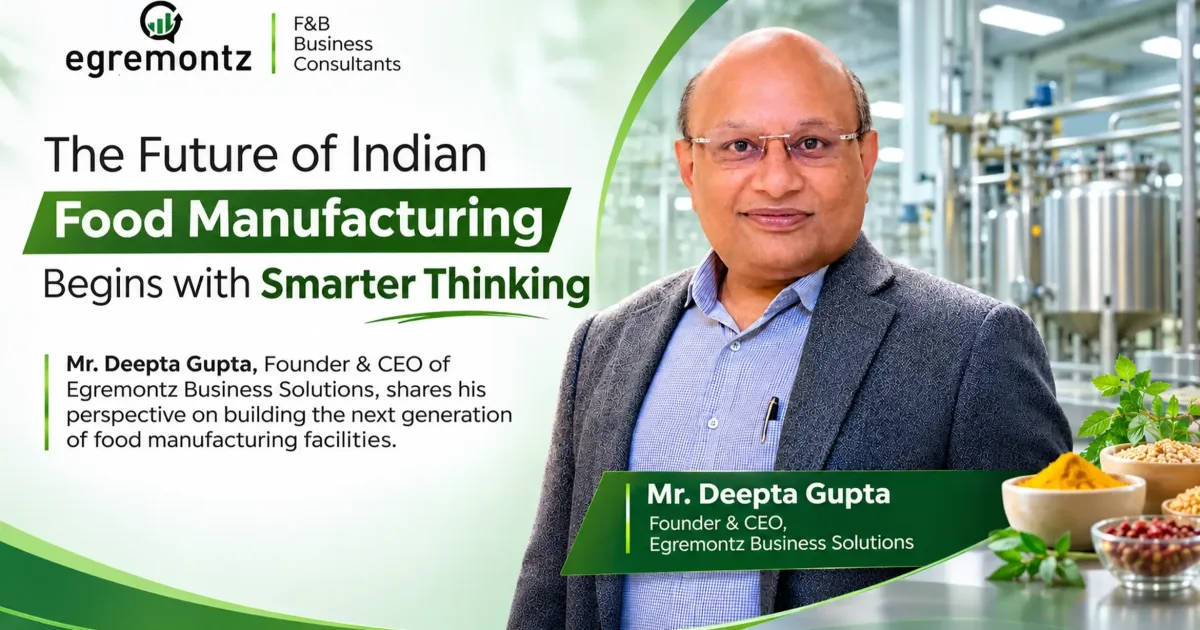
Ask ten sweet makers what a "modern factory" looks like and you'll get ten different answers. That's exactly the point Deepta Gupta, Founder & CEO of Egremontz Business Solutions, made in a recent feature in Mithai & Namkeen Times, published around the annual 9th World Mithai & Namkeen Convention & Expo.
The article asks a simple question that a lot of mithai and namkeen manufacturers are wrestling with right now: what will the factory of the future look like? Here's what it covers, and what it means if you're planning a plant of your own.
Start with fit, not with machines
Deepta's first point is a reality check. There is no single blueprint for a modern factory.
Before anyone draws a layout or orders equipment, a manufacturer needs to be honest about a few basics. How much do you actually produce? What do your batch sizes look like? And how much modernisation does the business really need?
Get those answers wrong and you can end up with a large, heavily automated plant attached to a fairly traditional, small operation. That doesn't make the factory more advanced. It often makes it less economical.
As the magazine puts it:
"For him, modernisation begins with fit: the right scale, the right process flow and the right level of technology for the product being made."
It's the same principle Egremontz brings to plant projects as a food consultant in Delhi. The right plant is the one that suits your product and your volumes, not the one with the most machines.
Hygiene that's built into the building
Once the scale and process flow are clear, the physical plant starts to change. The feature describes a factory where hygiene is designed in rather than added later: controlled production areas, better temperature management, mechanised handling, automated cleaning systems and fewer points where people touch the product directly.
For mithai in particular, where so much has traditionally been done by hand, fewer contact points make a real difference to food safety.
Your data becomes part of the plant
The article also makes the case that information is now part of the factory itself. Production volumes, temperatures, recipes, batch records, wastage, energy use, inventory and traceability can all be tracked digitally.
That's what lets a manufacturer keep a recipe consistent across shifts, spot where wastage is creeping in, or trace a batch quickly if there's ever a question. In the magazine's words, the future factory "combines the art of Indian sweets and snacks with the precision of food engineering."
Planning a mithai or namkeen plant in Delhi NCR?
Whether you're setting up a new sweets or snacks unit or upgrading an old one, the starting point is the one Deepta describes: get the scale, process flow and technology right for your product before you spend on equipment.
At Egremontz, we help food businesses with food processing plant planning, from feasibility and layout to equipment selection and commissioning, along with DPRs and business advisory for owners who need the numbers to stack up first.
If you're looking for a food consultant in Delhi to look at your project, book a free consultation and tell us what you're building.